Key takeaways
- JBL Safe Sound technology caps volume at 85dB by default
- Parental controls let you set the limit even lower than the default
- Active noise cancellation for flights and car rides
- Foldable, adjustable headband for growing kids
Regular headphones can push well past 100 decibels — loud enough to cause hearing damage with extended use, and kids rarely self-regulate volume on a tablet or in-flight entertainment screen. Headphones built for kids cap output at a safer level, usually around 85 decibels, while still being durable enough to survive being dropped, sat on, or chewed on the headband.
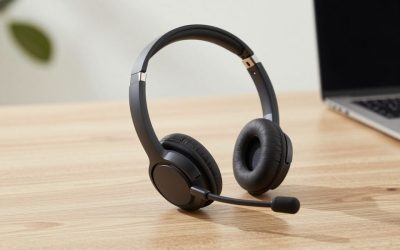
JBL Junior 470NC
- JBL Safe Sound technology caps volume at 85dB by default
- Parental controls let you set the limit even lower than the default
- Active noise cancellation for flights and car rides
- Foldable, adjustable headband for growing kids
Pros: Rare combination of real ANC and a volume cap in the same kids headset, useful for flights where ANC reduces how loud kids turn things up to compensate for engine noise; adjustable parental limit below the standard cap
Cons: Pricier than basic wired kids headphones; ANC adds another component that can eventually wear out or need charging
Belkin SoundForm Mini
- 85dB volume cap built in, non-adjustable
- Roughly 30 hours of battery life on a charge
- Built-in microphone for calls and video chats
- Compact fit designed for smaller heads
Pros: Simple, budget-friendly, and genuinely kid-proof in build quality; long battery life means fewer charging interruptions; built-in mic makes it usable for school video calls, not just media
Cons: Fixed 85dB cap with no way to adjust lower for very young children; fewer features than pricier ANC options
noot products K11
- Foam-padded headband and ear cushions aimed at younger kids
- 85dB volume limiting, wired 3.5mm connection
- Tangle-resistant cord, foldable design for travel
Pros: Wired design means no charging to manage and no Bluetooth pairing issues — simplest option for the youngest kids; soft build reduces the chance of the headband snapping under rough use
Cons: Wired-only limits use with devices lacking a headphone jack without an adapter; no ANC or premium audio features at this price point
Buying Tips
- 85 decibels is the generally cited safe threshold for extended listening for children’s hearing — check that any kids headphones you buy explicitly advertise a hard volume limit, not just “kid-friendly design,” since some novelty headphones skip the limiter entirely.
- Wired options remove battery management entirely, which matters more for younger kids who won’t remember to charge a device; Bluetooth models trade that convenience for freedom of movement and no cord to get tangled.
- Reviewers have flagged that not every advertised volume limiter hits its target consistently — if precise, verified limiting matters (for a child with hearing sensitivity, for example), look for brands with third-party testing rather than just a manufacturer’s claim.
FAQ
Is 85dB actually quiet enough for kids to enjoy?
Yes — 85dB is roughly comparable to average classroom or street noise, loud enough to be enjoyable for music and video without the sustained damage risk of headphones that can hit 100dB+ at max volume.
Do volume-limited headphones work with any device?
Most work with any Bluetooth source or standard 3.5mm jack, but the volume cap is enforced by the headphone hardware itself, so it works consistently regardless of which tablet, phone, or in-flight system it’s plugged into.
Can older kids and teens use standard (non-limited) headphones safely?
With supervision on volume levels, yes, but a volume-limited model removes the guesswork entirely, which is the main reason parents choose them over regular headphones for younger children specifically.
Puro Sound Labs BT2200
- Volume-limiting technology capped at 85dB, independently lab-tested rather than just advertised
- Bluetooth wireless with roughly 18 hours of battery life
- Studio-quality driver tuning aimed at better sound than typical kids headphones
Pros: Independently verified volume limiting addresses the exact concern some reviewers raise about inconsistent kids-headphone volume caps; noticeably better audio quality than most volume-limited competitors, which parents and kids both tend to notice
Cons: Priced above basic wired kids headphones like the noot products K11; Bluetooth means battery management, unlike simpler wired options
More buying tips
If a volume cap being independently lab-verified matters to you — rather than taking a manufacturer’s marketing claim at face value — look specifically for brands like Puro that publish third-party testing results, since the broader kids-headphone category has had documented inconsistency in how strictly some models actually enforce their advertised decibel limit.
Do kids headphones need replacing as children grow?
Most adjustable-headband models, including the JBL Junior 470NC and Puro BT2200, are designed with enough adjustment range to fit from early elementary age through the pre-teen years, so a well-chosen pair often does not need replacing purely due to head growth within that span.
Is Bluetooth or wired better for very young children specifically?
Wired is generally simpler for the youngest kids since there’s no pairing process, no battery to die mid-use, and less risk of a lost or broken Bluetooth earpiece — most parents shift toward Bluetooth models as kids get older and want more freedom of movement.
Can kids headphones be used safely on long flights for noise reduction?
Models with built-in ANC, like the JBL Junior 470NC, help reduce perceived engine noise on flights, which in turn means kids don’t need to push the volume cap as hard to hear over the cabin noise — a real secondary safety benefit beyond just the headphone’s own decibel limit.
Do all kids headphones fit toddlers, or only older children?
Headband-adjustable models generally fit from roughly age 3 and up, but the smallest toddlers may still find any over-ear headphone too large or heavy; for very young children, a snug wired option like the noot products K11 with a lighter, more flexible headband tends to fit more comfortably than bulkier ANC models.
Write Your Review
No reviews yet. Be the first to share your experience!