Key takeaways
- Measure TV weight and VESA pattern before ordering, not after it arrives.
- Confirm UL listing or a published weight-test certification for anything heavier than a bedroom TV.
- Check your lease’s specific wording on anchors versus drilling — the two are often treated differently.
- Keep the install guide and original packaging in case you need to patch and remove it at move-out.
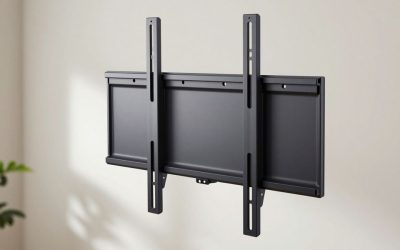
Standard TV wall mounts assume you can drill into wall studs and patch the holes when you eventually move out. Renters often cannot do that — or simply do not want to risk a security deposit over a few mounting holes a landlord might flag at move-out inspection. A small category of no-stud, no-drill mounts has grown specifically to solve this problem, using drywall-rated toggle anchors, patented stud-free hardware, or furniture straps instead of lag bolts sunk directly into studs.
ECHOGEAR No Stud TV Wall Mount
ECHOGEAR’s no-stud mount is UL listed and fits TVs from 32 to 77 inches up to 100 pounds. It uses a drywall-rated hardware system rather than adhesive strips, with a documented three-step installation process and a built-in bubble level to keep the TV straight without a separate tool. Because it carries UL listing, it comes with a tested, certified weight rating rather than just a manufacturer estimate, which matters more than it sounds for anything over a 50-inch TV where the margin for error on cheap hardware gets smaller.
Check ECHOGEAR No Stud TV Wall Mount on Amazon
Perlegear No Drill TV Wall Mount
Perlegear’s version targets smaller TVs, 24 to 65 inches up to 100 pounds, and is built around a compact, space-efficient bracket that review guides describe as quick to install without needing a stud finder at all. It is a sensible pick for bedrooms, dorm rooms, or secondary TVs where a slimmer profile against the wall matters more than mounting the largest possible screen in the house.
Check Perlegear No Drill TV Wall Mount on Amazon
HangSmart HSTV100
HangSmart’s HSTV100 is built around a patented stud-free mounting system and covers an unusually wide size range, 19 to 100 inches, with up to 150 pounds of weight capacity. It is explicitly marketed as a renter’s option on the product listing, and the wide size range makes it useful if you plan to upgrade the TV itself later without needing to buy an entirely new mount to match.
Check HangSmart HSTV100 TV Mount on Amazon
monTEK No Stud TV Wall Mount
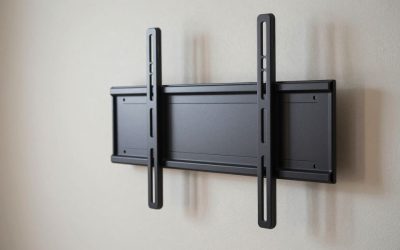
For larger or heavier TVs, monTEK’s no-stud mount is rated up to 220 pounds and 100 inches, with a slim under-1-inch profile that keeps the TV close against the wall rather than jutting out. It is designed to work on both drywall and concrete, which is genuinely useful in apartment buildings where wall construction can vary noticeably from floor to floor or between older and newer units.
Check monTEK No Stud TV Wall Mount on Amazon
What to check before buying any no-drill mount
Weight capacity and VESA compatibility matter more here than with a standard stud mount, since the holding force is distributed across drywall anchors rather than concentrated on a single solid stud behind the wall. Measure your TV’s VESA pattern — the bolt spacing on the back panel — and its actual listed weight, not just the screen size in inches, before choosing a mount; the wrong match between TV weight and mount rating is the single most common complaint across reviews in this entire product category.
Checking your lease before you buy
Also confirm your lease specifically allows small drywall anchors even if it explicitly bans drilling into studs — most of these mounts still use small anchors rather than pure adhesive strips, which is generally considered patchable and deposit-safe by most landlords, but it is worth a quick check or a photo of the mount’s install guide sent to a landlord or property manager before committing a 65-inch TV to a wall you do not own.
Cable management matters too
A no-drill mount solves the TV itself, but power and HDMI cables still need somewhere to go — adhesive cable channels or clips that stick to the wall rather than the drywall anchors used for the mount keep cords tidy without adding any additional holes. This is a small detail most renters forget to plan for until the TV is already up and the cables are visibly dangling down the wall in full view of anyone who walks in.
- Measure TV weight and VESA pattern before ordering, not after it arrives.
- Confirm UL listing or a published weight-test certification for anything heavier than a bedroom TV.
- Check your lease’s specific wording on anchors versus drilling — the two are often treated differently.
- Keep the install guide and original packaging in case you need to patch and remove it at move-out.
VIVO No-Stud TV Wall Mount
VIVO’s no-stud mount targets smaller TVs, typically 13 to 42 inches, with a drywall-rated hardware kit and a low-profile bracket that suits a bedroom, dorm, or secondary TV where a heavier-duty mount like the HangSmart or monTEK options above would be unnecessarily bulky for the screen size involved.
Frequently asked questions
Will a no-drill mount leave any marks when removed at move-out?
Drywall-rated anchors used by mounts like the ECHOGEAR and HangSmart leave small holes similar to a picture hook, which most landlords consider normal wear rather than damage, though patching the holes with a dab of spackle before move-out is a quick way to avoid any dispute entirely.
Can a no-stud mount hold a TV on plaster walls in an older building?
It depends on the plaster’s condition — older plaster can be more brittle around drilled anchor points than modern drywall, so testing a small inconspicuous spot first, or asking a building super about wall construction, is worth doing before committing a heavier TV to a no-stud mount in an older apartment.


Write Your Review
No reviews yet. Be the first to share your experience!