Key takeaways
- Movies and TV dominate your listening time, multiple people watch from different seats → soundbar.
- Music matters as much as or more than movies, and you have one main listening chair → bookshelf speakers.
- Renting, limited time, want it working today → soundbar.
- Already own or planning to buy an amp/receiver → bookshelf speakers give the bigger upgrade per dollar.
Soundbars and bookshelf speakers solve the same basic problem — thin, weak-sounding TV speakers — in very different ways, and the right choice depends more on how you actually use the room than on a simple “which sounds better” ranking. Soundbars are built for convenience and dialogue clarity above everything else; a good pair of bookshelf speakers is built for music fidelity and a wider, more three-dimensional soundstage that a single long bar cannot physically reproduce.
Soundbars: plug-and-play, built for movies and TV
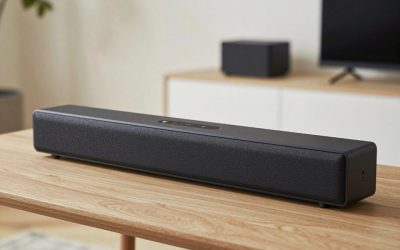
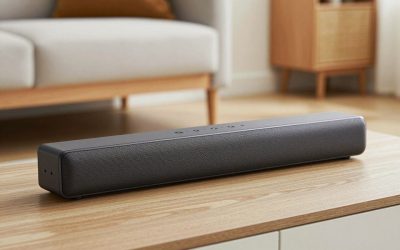
A soundbar is a single unit that sits under or in front of the TV and connects over one HDMI eARC cable in most modern setups, which makes installation close to effortless compared to running speaker wire or pairing and positioning multiple separate units around a room. Reviewers consistently note that soundbars are better at keeping dialogue intelligible without needing to crank the volume during quiet scenes, and models with Dolby Atmos support can bounce height-channel audio off the ceiling for a more immersive movie-watching experience without installing any actual ceiling-mounted speakers or running wire through a wall.
Check Sony HT-A5000 Dolby Atmos Soundbar on Amazon
Check Samsung HW-Q600C Soundbar on Amazon
Bookshelf speakers: better for music, need more setup
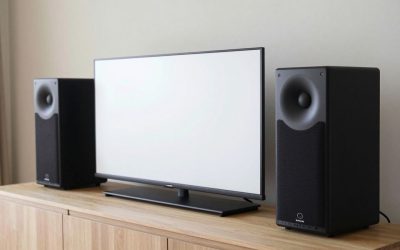
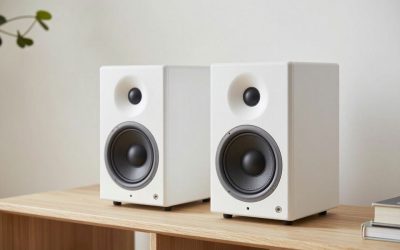
Passive bookshelf speakers like the KEF Q150 or Klipsch RP-600M II need a separate amplifier or AV receiver to actually drive them, while powered options can connect via Bluetooth or HDMI ARC entirely on their own without extra boxes. What you gain in exchange for the added setup is a noticeably wider stereo image and more accurate reproduction of instrument detail — audio reviewers often describe this as the speakers “disappearing” into a 3D soundstage rather than sound obviously coming from one visible box in the corner of the room. For someone who listens to music as often as they watch movies, that difference in presentation is usually the deciding factor over raw loudness or bass extension.
Check KEF Q150 Bookshelf Speakers on Amazon
Check Klipsch RP-600M II Bookshelf Speakers on Amazon
Check Edifier R1280T Powered Bookshelf Speakers on Amazon
Which one actually fits your room?
If the TV is the main use case and the room has multiple regular seating positions spread across a couch and side chairs, a soundbar is the more forgiving choice — it fills the room diffusely through wall reflections rather than creating one narrow sweet spot that only sounds right from a single chair. If you have a dedicated listening position and care about music as much as film audio, bookshelf speakers placed correctly can outperform a soundbar costing several times as much, at the cost of visible cabling and a somewhat more involved initial setup process. Apartment renters who need something installed and working the same afternoon generally lean soundbar; anyone building a longer-term home audio setup around a turntable or a serious streaming music habit tends to lean toward bookshelf speakers instead.
A middle path: powered bookshelf speakers
Options like the Edifier R1280T or newer powered bookshelf models split the difference between the two categories — no separate amplifier needed, Bluetooth streaming built directly into the cabinet, and still noticeably better stereo separation than a soundbar at a similar price point. They are a reasonable compromise for anyone who wants genuine bookshelf-speaker sound without committing to a full receiver-based setup and the extra components that come with it.
Quick decision guide
- Movies and TV dominate your listening time, multiple people watch from different seats → soundbar.
- Music matters as much as or more than movies, and you have one main listening chair → bookshelf speakers.
- Renting, limited time, want it working today → soundbar.
- Already own or planning to buy an amp/receiver → bookshelf speakers give the bigger upgrade per dollar.
There is no universally “better” option here — match the choice to whether movies or music dominate your actual listening time, and to how much setup effort and visible cabling you are willing to accept in exchange for the upgrade in sound quality.
A note on size and placement
Soundbars are designed to sit directly below or in front of a TV and generally need very little clearance, which makes them easy to fit on an existing TV stand without rearranging furniture. Bookshelf speakers need to be placed a few feet apart and ideally a short distance from the back wall to sound their best, and stands or shelf space for two separate boxes is something to plan for before buying rather than after the speakers arrive and there is nowhere good to put them.
Subwoofers: an optional add-on either way
Neither a soundbar nor a pair of bookshelf speakers reproduces deep bass particularly well on its own, since both rely on relatively small drivers compared to a dedicated subwoofer. Many soundbar packages include a wireless subwoofer bundled in, which is part of why they are often perceived as having bigger, punchier bass out of the box than a bookshelf pair at a similar price. Bookshelf speaker owners who want that same low-end weight generally add a separate powered subwoofer later, which is an extra purchase worth budgeting for if deep bass in movies and bass-heavy music matters to you.

Write Your Review
No reviews yet. Be the first to share your experience!